


TLDR; Trauma isn’t always what people expect it to be, and it doesn’t always come from what looks, from the outside, like a major event. Below, Ryan Hegarty, BABCP-accredited CBT therapist and trained EMDR practitioner at Slán Therapy, explains what trauma actually is, how it tends to show up, and how EMDR therapy for trauma works to help the brain properly process what’s happened.
| If you’re currently in crisis or feel unsafe, this article isn’t a substitute for urgent support. Contact your GP, call 111 (option 2), or go to your nearest A&E. In an emergency, always call 999. |
What is trauma?
Trauma happens when an experience overwhelms your ability to process it in the moment, so it doesn’t get filed away as something that’s over and done with. Instead, it stays active, still setting off reactions in your body and mind long after the danger has passed.
Trauma isn’t defined by how serious an event looks from the outside. It can come from a single incident, a prolonged period, or a relationship, and two people can go through the same event with very different outcomes. What matters isn’t the size of the event; it’s whether your nervous system processed it properly at the time.
This is why trauma responses often feel disproportionate to the person experiencing them. A raised voice, a certain smell, a particular time of year, something small can trigger a reaction that feels far bigger than the moment in front of you. That’s not overreacting. It’s a sign that part of the original experience hasn’t been resolved.
I’m Ryan Hegarty, a BABCP-accredited CBT therapist and trained EMDR practitioner based in Essex. Before private practice, I worked as a mental health nurse across high-secure and medium-secure settings, including Broadmoor Hospital, before moving into primary care. That range of experience means I’ve seen trauma sit at every level of severity, and I’ve seen how much it can affect someone even when, on paper, their life looks fine.
Signs of unresolved trauma
The most common signs of unresolved trauma are intrusive thoughts, a heightened startle response, avoidance, emotional numbness, and physical symptoms such as tension or a racing heart. It rarely announces itself as clearly as flashbacks or nightmares; it tends to show up more quietly than that.
- Intrusive thoughts or images that surface without warning, particularly around reminders of what happened
- A heightened startle response, feeling constantly on edge or easily jolted
- Avoidance, steering clear of certain places, people, or situations without always knowing why
- Emotional numbness, feeling disconnected from yourself or the people around you
- Physical symptoms such as a racing heart, tension, nausea, or a general sense of bracing for something to happen
- Difficulty trusting your own judgement or other people, even when there’s no obvious reason not to
- Feeling stuck, like your reactions to certain things haven’t moved on, no matter how much time has passed
If some of this sounds familiar, you don’t need to have all the answers before reaching out. A free discovery call is a low-pressure way to talk through what you’re noticing and whether it’s worth exploring further.
Why doesn’t trauma resolve on its own?
Most difficult experiences do fade with time. You think about them less, the emotional charge softens, and eventually they sit in the past where they belong. Trauma is different. For reasons that aren’t fully understood, some experiences get stored in a way that keeps them feeling current, as though your brain hasn’t been told the danger has passed.
This is often why talking about a traumatic experience doesn’t always shift how it feels. You can understand exactly what happened, and even understand your reaction to it, and still feel the same way every time it comes up. That gap between knowing and feeling is usually a sign the experience needs to be processed differently, not just talked through.
What is EMDR therapy?
EMDR (Eye Movement Desensitisation and Reprocessing) is a structured, evidence-based therapy that helps the brain reprocess experiences that haven’t resolved on their own, so they carry less distress and stop setting off reactions in the present. It’s recommended by the National Institute for Health and Care Excellence (NICE) as a first-line treatment for post-traumatic stress disorder, alongside trauma-focused CBT.
Unlike traditional talking therapy, EMDR doesn’t rely primarily on discussing the event in detail. It works with the memory itself, using structured bilateral stimulation to change how it’s stored.
Is there evidence EMDR actually works?
Yes. EMDR has one of the strongest evidence bases of any psychological treatment for trauma. It’s recommended by NICE and by the World Health Organization as an effective treatment for PTSD, and it’s been studied in numerous randomised controlled trials over more than three decades. Research consistently shows that a large majority of single-incident trauma cases see meaningful symptom reduction within a relatively small number of sessions, though results vary depending on the complexity and duration of the trauma involved.
How does EMDR help with trauma?
EMDR helps trauma recovery by using bilateral stimulation, alternating eye movements, sounds, or tapping, to help the brain reprocess a distressing memory while it’s brought to mind. In a session, you focus on the memory, feeling, or body sensation connected to what happened while following this structured pattern, then pause after each short round to check in on what’s come up.
Over repeated rounds, the memory typically starts to lose its emotional charge. It doesn’t get erased, but it stops feeling like a live threat. People often describe it as the memory becoming something that happened, rather than something that’s still happening.
EMDR isn’t only for what’s typically thought of as “big T” trauma. As a trained EMDR practitioner working across Essex and London, I also use it for:
- Anxiety is connected to past experiences such as “socially traumatic memories”
- Distressing memories that keep resurfacing
- Physical symptoms tied to a trauma response, such as a racing heart or chronic tension
- Shame or self-critical beliefs that trace back to a specific experience
How many EMDR sessions does trauma recovery take?
This depends heavily on what you’re bringing to therapy. A single, well-defined traumatic incident, a car accident or a specific frightening event, for example, may see meaningful change in as few as six to twelve sessions. Trauma that’s more complex, repeated, or tied to childhood experiences typically takes longer, since there’s more material to work through and often more than one memory network involved.
A typical EMDR session runs 50 minutes, though longer sessions are sometimes used for focused trauma work, always agreed in advance. The first one or two sessions are usually spent on preparation: understanding your history, building resourcing and stabilisation skills, and making sure you feel equipped to handle what reprocessing might bring up, before any bilateral stimulation work begins. This isn’t a therapy you’re thrown into cold.
Is EMDR better than CBT for trauma?
Neither is inherently “better.” They’re both NICE-recommended, evidence-based treatments for PTSD, and the right choice depends on the person and the type of trauma involved.
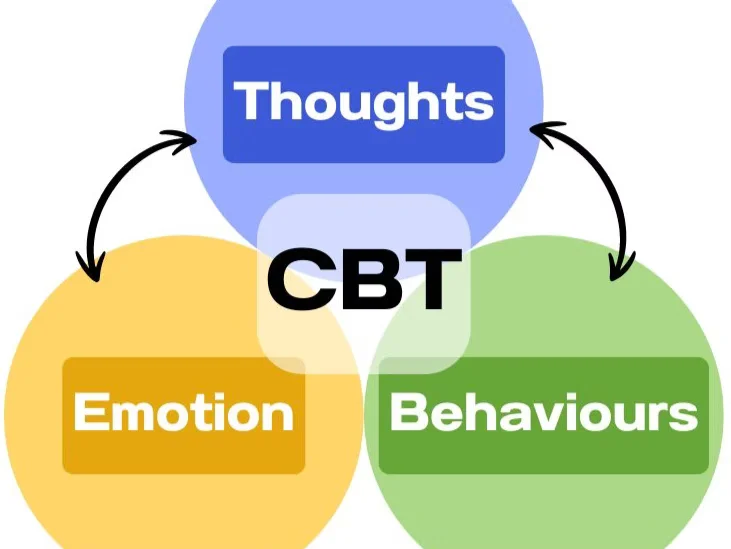
Trauma-focused CBT works by examining the thoughts and beliefs connected to the traumatic event, and gradually processing the memory through structured discussion and exposure. EMDR works more directly with the memory itself, using bilateral stimulation rather than extended verbal processing.
In practice, EMDR is often preferred by people who find it difficult or overwhelming to talk through an experience in detail, since it requires less verbal recounting. CBT can be a better fit where the trauma is closely tied to specific unhelpful beliefs that benefit from being examined and challenged directly. As a therapist trained in both, I’ll usually recommend whichever approach, or combination, fits what you’re actually dealing with, rather than defaulting to one.
Is EMDR right for you?
You don’t need a clear diagnosis or a tidy explanation of what happened to consider EMDR. If something from the past still feels active, if your reactions to certain things feel bigger than the present moment can explain, that’s usually enough of a reason to explore it.
If you’d like to talk through whether EMDR therapy is the right approach for what you’re dealing with, book a free discovery call and we’ll work it out together.